
Introduction
Table of Contents
We all know that cooking oils not only enhance and stimulate the taste of our food but also affect our overall health and well-being. Within Ayurvedic medicine, the use of oils in our food is meticulously considered. It is so, because, each type of oil carries specific properties which affect the constitution of our doshas – the three essential constituents of our body.
In India, most of the people regularly consume refined oils. Palm oil was the most used oil in India in 2023. Common refined oils like sunflower oil, palm oil, and soybean oil can cause serious health problems including heart disease, as they contain high amounts of saturated fatty acids. Oils are refined with the treatment of many chemicals that strip their natural nutrients and introduce potentially harmful chemicals.
Therefore, choosing the right cooking oil is of paramount importance. This article discusses the use of oils that are suitable for one’s doshic constitution from an Ayurvedic perspective.
Hazardous Effects of Refined Cooking Oils
Refined oil, commonly sold in the market as vegetable oil, undergoes extensive processing, including bleaching, chemical treatments, and deodorizing. For this reason, excessive consumption of refined oils results in a plethora of life-threatening diseases, including diabetes, hypertension, obesity, and cancer.
Nutrient Loss
- Refining removes natural nutrients, antioxidants, and vitamins like Vitamin E from the oil, which are beneficial for health.
High Amount of Unhealthy Fatty Acids
- Some oils develop trans fats during the process of refining, which can cause diabetes, heart disease, and insulin resistance.
- The high amount of omega-6 fatty acids in refined oils can disrupt the balance between omega-6 and omega-3 fatty acids within the body.
Presence of Chemical Residues
- Chemicals like hexane are used at the beginning of the refining process, the residues of which can remain in the final product causing potential health risks.
Risk of Hormonal Imbalance
- Especially in cases of excessive consumption, the harmful chemical substances present in refined oils can adversely affect the endocrine system, which can lead to hormonal imbalance.
Best Cold-Pressed Cooking Oils
Traditionally, cold-pressed oils are extremely beneficial for health and well-being. Cold pressing is an ancient process of extracting oil where heat is not involved, which retains the oil’s natural flavor and smell. Unlike refined oils, cold-pressed oils are not treated with harsh chemicals like hexane. Thus, they are devoid of harmful chemicals and additives, making them a more suitable option for cooking. Additionally, cold-pressed oils retain their nutritional value and are rich in healthy fats and phytochemicals like Vitamin E.
Coconut Oil

Buy
"Kapiva Virgin Cold-Pressed Coconut Oil 500ml"
As an Amazon Associate, we earn from qualifying purchases at no extra cost to you.
- Coconut oil is especially used in the southern region of India as a cooking oil, where it is used to make various savory and sweet dishes.
- Coconut oil is madhura (sweet) in taste, thus providing nourishment and strength to the body.
- It has a cooling effect (sheeta virya) when consumed, making it beneficial in pacifying Pitta. Therefore, it is suitable for persons who have a naturally warm body type to prevent overheating. It is best to consume during the summer to prevent adverse effects of the hot weather.
- It replenishes and hydrates bodily tissues and provides vital strength to the muscles.
- It helps alleviate dryness in the body as it pacifies Vata. In small amounts, it enhances the digestive tract.
- However, in excess it aggravates Kapha, resulting in ailments like cough, obesity, and lethargy. Therefore, it should not be taken by persons suffering from similar ailments, and during the winter season.
Groundnut Oil

Buy
"Anveshan Wood Pressed Groundnut Peanuts Oil 1L"
As an Amazon Associate, we earn from qualifying purchases at no extra cost to you.
- Groundnut oil is commonly used in the western regions of India, primarily in Gujarat, Rajasthan, and Maharashtra. It is predominantly used for frying and sautéing.
- Similar to coconut oil, peanut oil is sweet (madhura), supporting nourishment and strength.
- It is unctuous (snigdha), lubricating and softening the bodily tissues.
- Contrary to coconut oil, groundnut oil has a heating effect (ushna virya), making it effective in pacifying cold-related disorders caused by Vata.
- It provides strength and energy to the body, especially enhancing the muscular tissues (mamsa). Additionally, it provides lubrication to joints and promotes bone health.
- However, in excess it can aggravate Pitta, resulting in overheating and heat-related disorders. Although it aggravates Kapha slightly, overconsumption can result in Kapha disorders, as mentioned in the case of coconut oil.
Sesame Oil

Buy
"Puvi 1L Cold Pressed Gingelly/Sesame Oil (Virgin, Chekku/Ghani) - 1 Litre"
As an Amazon Associate, we earn from qualifying purchases at no extra cost to you.
- Sesame oil is used primarily in some fragmented parts of southern India. It is a less common oil used for cooking but is used for making traditional dishes.
- Sesame oil is highly regarded in Ayurveda due to its nourishing and medicinal properties.
- It has qualities similar to those of peanut oil but is even more beneficial than groundnut oil.
- Although it is unctuous, like any other oil, but is lighter, making it easy to digest.
- It is best to use it during the winter because of its heating potency. But it should be limited, or best avoided, during summer as it may overheat the body.
- It has anti-aging properties, providing vitality and strength to the bodily tissues.
Mustard Oil
Buy
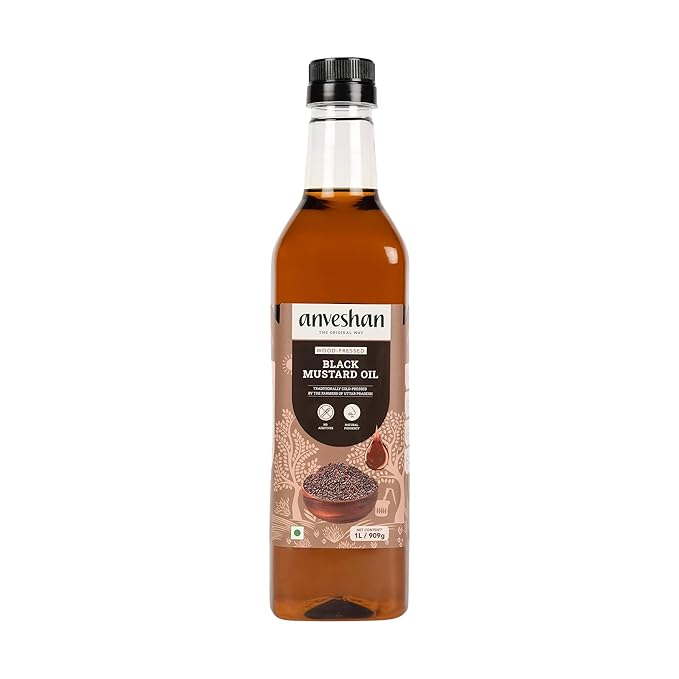
"Anveshan Wood Pressed Black Mustard Oil - 1L"
As an Amazon Associate, we earn from qualifying purchases at no extra cost to you.
- Mustard oil is one of the best cooking oils in India, being primarily used in the northern and eastern parts of India.
- It has the best balance of omega-3 and omega-6 fatty acids, making it suitable for managing heart-related issues.
- Its high smoking point makes it an ideal choice for high-heat cooking methods such as deep-frying and sautéing.
- It has a sharp, pungent taste, which is beneficial for stimulating digestion and removing toxins.
- Its heating potency helps in removing Kapha disorders like indigestion, obesity, and cough.
- However, it should be limitedly used by persons with a warm body to prevent overheating and Pitta disorders.
- Although there is a concern about the safety of mustard oil as it contains erucic acid, there is no significant evidence that suggests that erucic acid is severely harmful to humans.
- Nonetheless, mustard oil has been among the most popular oils used for cooking among Indians for thousands of years. The Lipid Association of India has identified mustard oil as suitable for heart health.
Conclusion
In this article, we discussed the cooking oils that are most suitable for Indians and Indian cuisine. We also learned about the various beneficial properties of these oils. Additionally, we learned the importance of cold-pressed oils and the health hazards of refined oils. All these things are explained from the perspective of the ancient wisdom of Ayurveda.
However, extravagant consumption of oil, whether cold-pressed or refined, may lead to a plethora of health issues. One should always limit oil consumption, as most foods, especially nuts and leafy vegetables, are naturally unctuous, to lead a healthy life. One of the most common issues that develops from excessive oil intake is obesity, which may further lead to type-2 diabetes.
References
- Statista: Consumption of edible oil across India in 2022/2023, by type (in million metric tons) – https://www.statista.com/statistics/1451817/india-edible-oil-consumption-by-type/
- NIH: Mustard oil and cardiovascular health: Why the controversy? – https://pubmed.ncbi.nlm.nih.gov/34924350/
- Erucic Acid—Both Sides of the Story: A Concise Review on Its Beneficial and Toxic Properties – https://pmc.ncbi.nlm.nih.gov/articles/PMC9962393/?utm_source=chatgpt.com